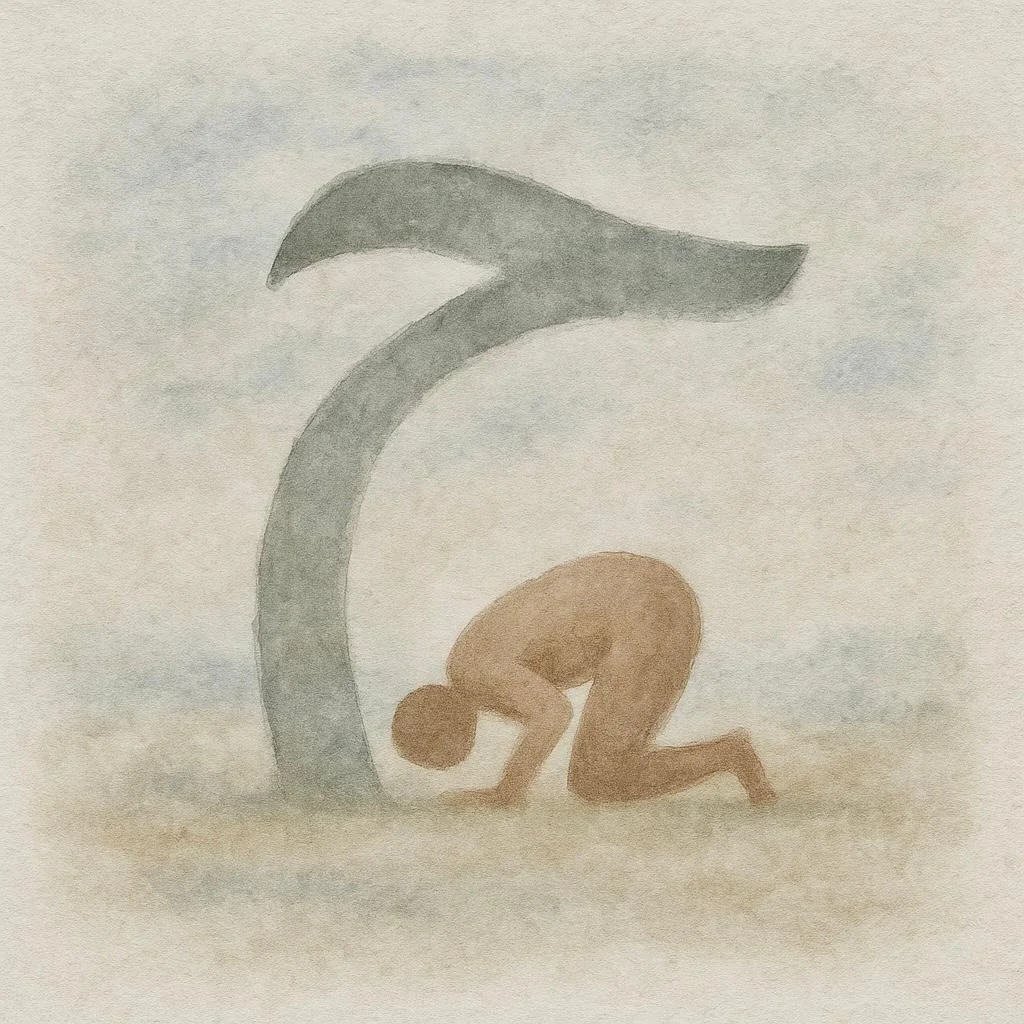

“successful indeed are the believers. those who in their ṣalāh have khushūʿ.”
— sūrah al-muʾminūn (23:1–2), tafsīr: ibn kathīr says these are the believers who are “fearful, still, and focused in their ṣalāh… their limbs calm, and their gaze lowered.”
you stand to pray, but your soul doesn’t rise with you.
your lips move through al-fātiḥah like muscle memory, but your mind is on the argument you had, the email you haven’t sent, the pain you haven’t named.
your heart arrives late, or not at all.
and you walk away from the prayer heavy – not because it meant nothing, but because you wanted it to mean everything.
this is not a failure. this is a cry for repair. and it means the rope between you and Allāh is still intact. because hearts that are dead don’t ache to return.
what khushūʿ actually is – and what it’s not
khushūʿ isn’t some mystical high reserved for the spiritually elite. it’s not a poetic mood, a teary-eyed trance, or a perfect performance.
imām al-ghazālī defines it in iḥyāʾ ʿulūm ad-dīn as “a state that originates in the heart, manifesting as stillness in the limbs and quietude in the voice.” in other words: it begins inside, and spills outward. it’s a kind of inner surrender, where the soul recognises Who it’s standing before – and bows long before the body does.
ibn al-qayyim takes it further. to him, khushūʿ is the fruit of deep maʿrifah – knowledge of Allāh. it is the heart’s migration to its true home. he writes in asrār aṣ-ṣalāh:
“when the heart is distracted, the limbs follow. But when the heart submits, everything else stills.”
khushūʿ, then, is not a technique. it’s a truth.
not how well you recite – but whether your soul is listening.
not how still your body is – but whether it’s still because your heart is kneeling.
so if you’re scattered – you’re not broken. you’re not failing. you’re just early on the path.
and here’s how to walk it.
1. clean the doorway before you enter
you cannot walk from dunya into divinity in one step.
your wudūʾ is not just ritual – it’s rhythm. a cleansing not just of limbs, but of pace. if your ablution is rushed, your mind still loud, your hands still scrolling – your heart will be the last to arrive.
slow down. let the water remind you:
i am preparing to meet the One who watches the unseen of me.
say bismillāh and mean it.
if you can, pray in a space that feels clean – not just physically, but emotionally. declutter the room. light a scent. dim the noise. even the corners matter when you’re about to kneel before the King.
2. don’t chase focus – chase meaning
you’re not distracted because you’re spiritually lazy.
you’re distracted because you’re saying words your heart hasn’t yet tasted.
you say iyyāka naʿbudu, but have you studied what it means to serve Allāh with love and fear at once?
you say māliki yawmi’d-dīn but have you paused to remember that you will stand in front of Him alone?
learn what you recite. not just surface translation – but the depth behind the words. how the prophet ﷺ recited them. what they moved in the hearts of the ṣaḥābah.
al-ghazālī says the prayer cannot reach the heart until the words mean something. so take your time. even if it’s just one verse this week. start with Allāhu akbar.
say it like He’s really greater – than the deadline, the heartbreak, the grief.
3. recognise what pulls you – and unhook from it
your thoughts aren’t random. they follow the scent of what you love.
when your mind wanders in prayer, pause. ask: where did it go?
was it your phone? your plans? someone who hurt you?
that’s your attachment speaking.
ibn al-qayyim called these distractions the “clutter of love” – evidence of what the heart clings to. and the remedy? isn’t self-loathing. it’s reattachment. move the love back to where it belongs.
between every two rakʿāt, make duʿāʾ:
“yā Allāh, clean my heart of what competes with You.”
4. use sujūd as a place to weep and recalibrate
you’re closest in sujūd – not just in posture, but in possibility.
if your focus is broken by then, bring your pain into the prostration.
say: “yā Allāh, i don’t know how to stay present, but i want to.”
say: “this sujūd is messy, but it’s still yours.”
say nothing, and let the silence speak on your behalf.
ibn al-qayyim said:
“the sujūd of the body is not enough. The sujūd of the heart is when it lets go of everything except Him.”
5. keep returning – that’s the real khushūʿ
khushūʿ is not always a constant state; most times, it comes in waves. so you’re not meant to sustain it – you’re meant to return to it.
every time your thoughts slip, pull them back.
again. and again. and again. each return is an act of worship.
don’t believe the whisper that says your prayer doesn’t count.
Allāh sees the tug-of-war inside you. and He rewards every time you choose Him again.
ibn kathīr said the verse in sūrah al-muʾminūn about khushūʿ came first – because without it, there is no true success. not because perfection is required, but because the struggle for it is the sign of life.
and finally: khushūʿ is not a feeling – it’s a relationship
some days you’ll feel sweetness. others, only stillness.
some prayers will pierce you. others will be quiet, almost mechanical.
but that doesn’t mean He isn’t watching.
it means you’re learning to stay – even when it doesn’t feel romantic. even when your heart is dry. even when you’re just showing up.
and that, in itself, is love.