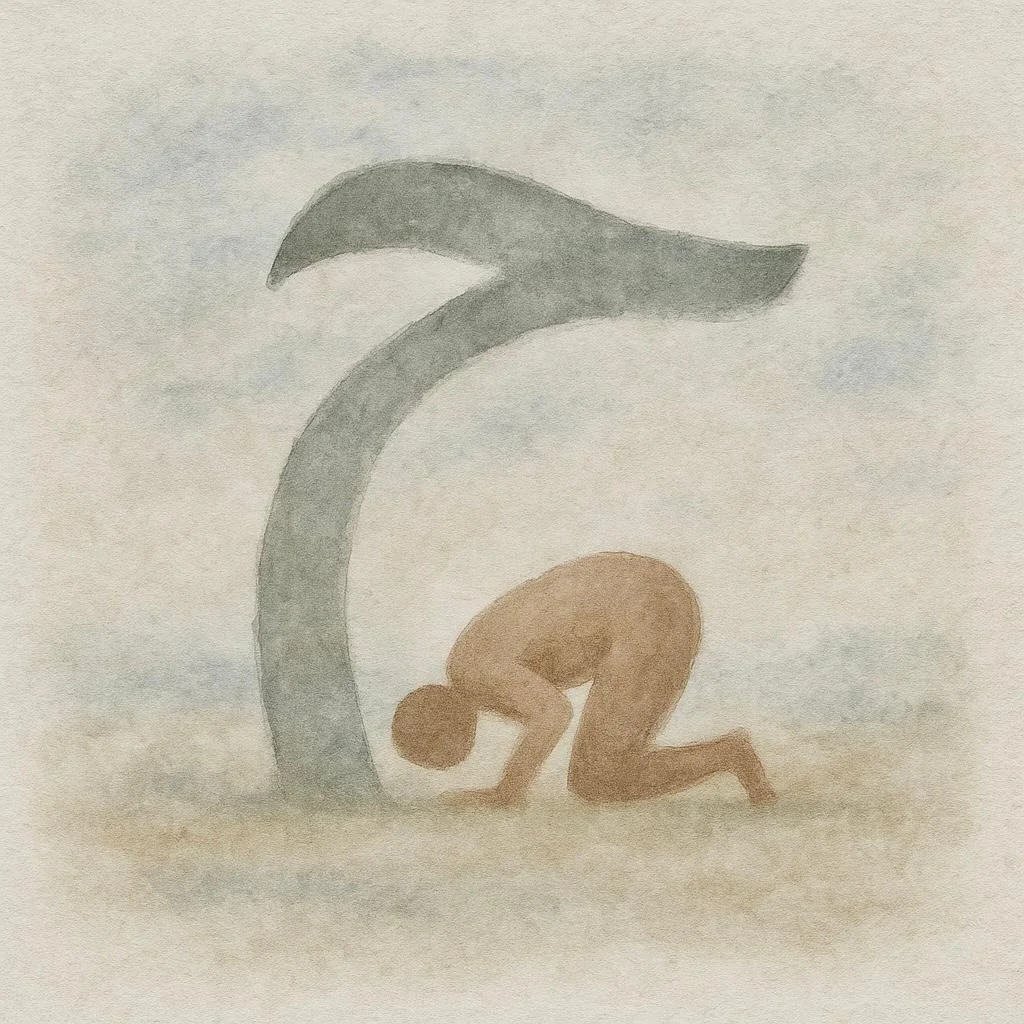

ghaflah does not begin with sin. it begins with silence and not the good kind; not the inward stillness that comes with dhikr or retreat, but a silence that feels neutral, numb, unbothered. a gap between the self and remembrance. a dulling of the edge. a forgetfulness so ordinary it almost seems harmless. that’s what makes ghaflah dangerous – it sedates.
the heart still beats, the body still obeys, the tongue still moves in prayer but Allāh is no longer felt. not feared, not longed for, not actively present in your inner world. He is known in theory, yes. believed in, yes. but distant – not because He withdrew, but because you stopped turning.
ghaflah is heedlessness, but not just inattentiveness. it is a withdrawal of intentional awareness. it is the loss of direction. the spiritual autopilot that makes you go through motions without orientation. it’s not that you stopped praying – it’s that you can’t remember the last time your prayer moved anything in you. and the worst part is, you don’t feel alarmed by that anymore.
ibn al-jawzī wrote that ghaflah is the opening through which every other disease of the heart enters. not because it’s active disobedience, but because it lowers the guard. a heart in ghaflah is like a house with its lights off and doors ajar – not yet destroyed, but vulnerable. and he warns that its most deceptive form is spiritual routine without reflection. the regular faster. the punctual pray-er. the person who appears committed, but whose heart has grown quiet.
ghaflah is not always external. you can look religious while deeply heedless. you can say bismillāh and still forget Who you’re invoking. you can speak about Allāh and still not be facing Him. the tongue remembers long after the heart forgets. and because the body continues, no one intervenes. not even you.
this is why al-ḥārith al-muḥāsibī wrote that heedlessness is the death of the heart before the death of the body. a person in ghaflah still functions, they still respond to messages, still show up, still smile. but there’s a hollowness to it. sujūd feels dry. dhikr feels mechanical. duʿāʾ feels staged. the sacred becomes familiar, and then dull, and then invisible.
so how does ghaflah begin?
- it begins with casual delay. “i’ll pray in ten minutes.”
- it begins with a skipped dhikr, rationalised by tiredness.
- it begins with listening to reminders without being moved.
- it begins when guilt becomes annoyance. when you resent being reminded.
- it begins when you stop yearning to be close to Allāh, and start treating closeness as an optional stage, reserved for better times.
and then it deepens.
the irony is, ghaflah often feels peaceful. there’s no guilt, no internal wrestling because your nafs is content. nothing is being demanded of it. but that calm is the calm of distance, not safety.
this is the test:
do you feel Allāh’s presence in your day?
does your heart respond when His name is mentioned?
do you pause before sin, or only after it?
do you crave sujūd, or do you perform it out of habit?
do you remember your own death more than you used to? or less?
if you cannot remember the last time your eyes softened during prayer, or your chest tightened at an āyah, or your heart trembled at the thought of meeting Him – that’s ghaflah. and it doesn’t go away on its own.
the cure is not spiritual intensity but interruption.
ibn al-jawzī says that a person caught in ghaflah must first force themselves to stop – not to do more, but to notice more. “break your rhythms,” he writes, “so that the heart begins to hear again.” that might mean praying earlier than usual. sitting after fajr for longer than you want to. walking without your phone. choosing one name of Allah to sit with until it stirs something again.
al-muḥāsibī adds that deliberate self-accounting is the surest path out of heedlessness. not just moral accounting, but emotional tracking. “how did my heart feel in ʿishāʾ? did i notice anything in the words of that āyah? did i even think about what i was asking in my duʿāʾ?” not to guilt yourself – but to reintroduce consciousness.
“and woe to those who pray — those who are heedless of their ṣalāh.” (107:4–5)
He didn’t say they didn’t pray.
He said they prayed heedlessly.
so how does it end? how does a person escape?
ghaflah is sustained by rhythm – the repetition of acts without presence and it’s broken by interruption. by making the familiar strange again. wake yourself, not by adding more worship, but by remembering Who the worship was always for.
sit with the Qurʾān until the words feel heavier than they did yesterday. pause before takbīrah and remind your heart Who you’re standing before. force your lips to form dhikr even when your chest feels dry – and beg Allāh to make it land.
“and remind, for indeed the reminder benefits the believers.” (51:55)
well, here is your reminder:
He still sees you.
you are still in His sight.
your numbness does not exempt you from accountability.
but it also doesn’t disqualify you from return.
the goal is not perfection, it’s presence. Allāh does not ask you to cry in every sajdah, or tremble in every prayer. but He does ask you to face Him – truly. and facing requires awareness.
ghaflah breaks not with volume, but with ikhlāṣ. you don’t need to scream to wake up. sometimes all it takes is one sincere glance upward. one breath of dhikr that actually means something. one act done with the full knowledge that He sees it, even if no one else ever will.
and when that glance leads to movement, and that movement leads to sujūd, and that sujūd leads to return – then you are no longer heedless.
you are remembering.
and remembrance is the beginning of every return.