
there is a disease of the heart that does not make noise. it does not come with urges, or cravings, or outbursts. it isn’t tied to pleasure. it isn’t even always tied to people. it’s harder to see because it doesn’t feel like sin – it feels like sincerity that’s been touched. bent. softened by the eye of someone else. riyāʾ can best be defined as is a fracture in direction; it is worship contaminated by the desire to be seen, admired, or validated and it is more common among the devout than the distant.
this is the one that slips through unnoticed because the act itself is still righteous. the prayer is still prayed. the duʿāʾ still made. the veil still worn. the charity still given. but the axis has shifted – not enough to collapse the act, just enough to compromise it. enough to place one eye on Allāh, and the other on the audience.
the scholars of the early generations treated riyāʾ like a fire that could burn through an entire lifetime of worship without ever touching the skin. they didn’t speak of it as a momentary lapse. they spoke of it as a pattern that, if left unchecked, transforms a life of sujūd into a long, elegant performance. the worst part is, the actor does not always know they are acting.
ibn al-jawzī writes, in his piercing way, that riyāʾ is “an inclination of the heart to be regarded by people for acts of worship.” not just performing for them – but wanting to be known as someone who performs. he says that even the desire to be admired for your religiosity is enough to corrupt the intention, even if you never speak or post or confess it. the heart is not safe just because the tongue is quiet.
this is what makes riyāʾ so dangerous. it can survive inside the best of people. it can slip into your solitude, into your restraint, into your claim that “i don’t even talk about my worship.” not talking or not posting doesn’t protect you. the question isn’t: are people watching? the question is: do you want them to?
in this age, riyāʾ has evolved. it is no longer just seeking admiration for public acts. it is also about curation, presentation, aesthetic piety. spiritual language that gestures towards sincerity but is designed to signal enlightenment. we’ve learned how to talk about our struggles just enough to be perceived as raw. how to share verses just enough to be seen as conscious. how to post our presence without naming it. and worst of all, how to cry in sujūd while checking if the tears will be remembered.
ibn rajab, whose tone is quieter but no less clear, wrote that riyāʾ is not just performing deeds for others – it’s performing for yourself. he said that even seeking the pleasure of the self through acts of worship can become riyāʾ. when your intention shifts from “Allāh sees me” to “i want to see myself as pious” – that’s riyāʾ. not all riyāʾ is horizontal. some of it is vertical, inward, reflexive. we crave our own gaze.
here is how to recognise it:
- if you pray more beautifully when you know someone is nearby
- if you speak about your connection with Allāh hoping to be perceived as aware
- if you share a moment of worship because of how it makes you look
- if you ever think, “i hope they saw that,” even in passing
- if you feel disappointed when no one praises your religiosity
- if your sincerity increases when you are being observed
then pause... not in shame but in self-accounting.
al-ḥārith al-muḥāsibī taught that the soul is a thief, constantly trying to steal sincerity from the act and convert it into self-worth. the only way to stop it is to examine your niyyah before, during, and after the act. before: who am i doing this for? during: am i still doing this for Him? after: am i satisfied because it was accepted, or because it was seen?
and if the answer is unclear, you don’t cancel the act. you repair the heart.
this is crucial: riyāʾ does not mean you stop praying in public, stop doing good, stop striving. the devil would love that. ibn al-jawzī wrote that one of shayṭān’s tricks is to make people abandon good deeds out of fear that they’re being insincere. but abandoning the deed is not sincerity – it’s surrender. instead, you keep going. but you keep checking.
the remedy is not retreat. it is intentional concealment, when possible. the acts that are most beloved to Allāh are often those unseen by anyone else. one secret ṣalāh. one hidden duʿāʾ. one charity no one finds out about. and most of all, one moment where you wanted to be seen, but instead turned your face back to Allāh.
riyaʾ is cured not by silencing the ego, but by starving it. the more you train yourself to love being unseen, the less you will crave the eyes of others. the more you do for His sake alone, the more allergic you become to applause.
at its root, riyāʾ is a failure to remember that Allāh is enough of an audience.
that He sees every breath. every sajdah. every pause before an act. every tremor of sincerity.
and one act done solely for Him is weightier than a thousand done in full view.
sincerity is not aesthetic: it is not visible. it is not poetic. it is a blade – sharp, inward, exacting and it cuts away every other gaze until only His remains.
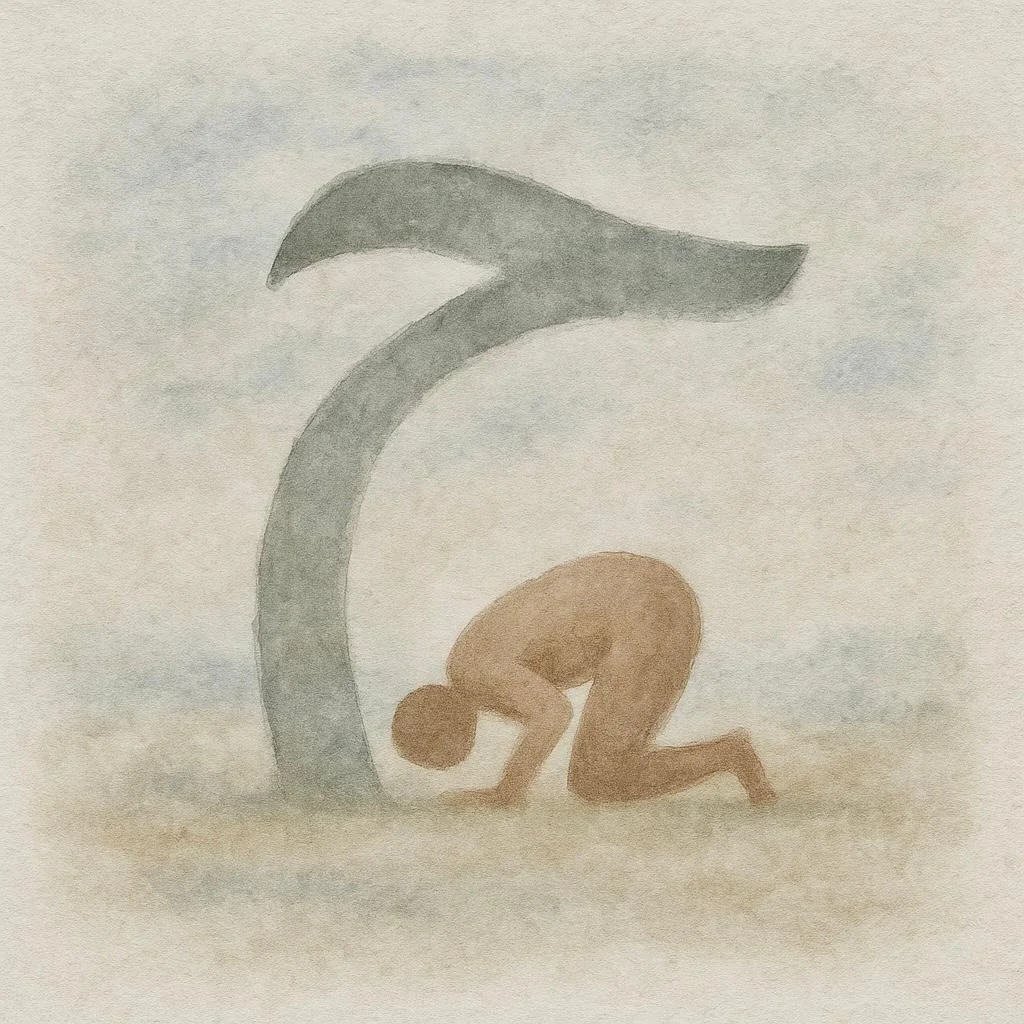
and when you finally bow, unseen by anyone else, not even your own ego, that is sujūd.