
there is a kind of spiritual rot that doesn’t smell like sin but like effort. like growth. like someone who’s been working on themselves and wants to be seen for it – not by others, but by themselves. ʿujb is not showing off. it is self-admiration. the inward gaze that lingers too long. the quiet swelling of the chest after a righteous act. the feeling that you are doing better than most. and that you should know it.
most people fear riyāʾ more. and rightly so – riyāʾ turns worship into theatre. but ʿujb is subtler. riyāʾ needs an audience whereas ʿujb happens in solitude. riyāʾ corrupts the intention by wanting others to witness it but ʿujb corrupts the heart by admiring the self for doing it. and the worst part is: it feels like a reward. you fasted with sincerity, and your nafs rewards you with pride. you prayed with focus, and your ego whispers, “you’re different now.” you held your tongue when you could have exposed someone, and you start to see yourself as someone with exceptional restraint.
ibn al-jawzī calls ʿujb “a veiled form of ignorance,” because the one who feels amazed by their own worship has clearly forgotten Who granted it. in sayd al-khāṭir, he writes: “the truly intelligent one is not impressed by his own actions. He sees them as meagre, flawed, and in constant need of Allāh’s acceptance.”
he warns that ʿujb often emerges after moments of spiritual elevation – not during weakness, but after obedience. not when you are crawling, but once you start walking upright. that is when the nafs begins to decorate the mirror.
in dhamm al-kibr, he says: “ʿujb is worse than arrogance, because arrogance still has an external opponent. the one with ʿujb, however, is at war with his own sincerity – and doesn’t even know it.”
ibn rajab, in jāmiʿ al-ʿulūm wal-hikam, expands the diagnosis. he says that ʿujb is rooted in a failure to recognise three things:
1. the source of tawfīq (divine enablement)
2. the flaws within one’s actions
3. the unreliability of the self
whoever forgets that every act of worship is a divine gift, not a personal achievement, will inevitably become amazed by what was never theirs to begin with.
who usually falls victim to ʿujb? those who pray regularly, fast voluntarily, study the dīn, leave sin, build discipline. people who actually care about their īmān – and that’s what makes this particular disease of the heart so... tricky. because once you’ve built a habit of obedience, the self becomes hungry for identity. it wants to own what was supposed to remain unclaimed.
you feel it when:
- you secretly replay your moments of strength, not in gratitude, but in admiration
- you hold people to a standard you’ve recently reached
- you feel quietly proud of your patience, your modesty, your clarity, your growth
- you notice someone else’s slip and think, “i used to be like that” – not in sorrow, but in self-congratulation
- you start narrating your transformation too often, even if you say “alḥamdulillāh” at the end
- you feel disrespected when corrected
- you’re more concerned with how your good deed felt than whether it was accepted
ibn al-qayyim, in al-fawāʾid, says: “sins accompanied by humility and regret are often more beloved to Allāh than good deeds accompanied by self-admiration.” this is not a call to sin. it’s a call to recognise that spiritual diseases are sometimes harder to treat than moral lapses – because they feel safe.
the prophet ﷺ warned his companions not just about major sins, but about invisible arrogance. he said, “three things are destructive: greed that is obeyed, desires that are followed, and a person being amazed by himself.” (reported by al-tabarānī, classed ḥasan by al-albānī.)
ʿujb is destructive not because it leads to sin directly – but because it prevents tawbah. the one who is amazed by their worship stops begging. the one who feels spiritually superior stops fearing themselves. and the moment you stop fearing yourself, you become vulnerable to every other disease.
deeper symptoms to look for:
1. spiritual benchmarking
you compare your efforts to others – not out of concern, but to confirm your superiority. even if silently. “i pray more than they do.” “i don’t dress like that anymore.” “i don’t waste time like they do.”
2. narrative control
you start editing how you tell your story. downplaying your past, highlighting your transformation, omitting the relapse, exaggerating your clarity.
3. emotional pride
you begin to feel morally hurt when someone doesn’t recognise your religiosity. you expect your efforts to be perceived. when they aren’t, you feel slighted – not because your sincerity is doubted, but because your self-image is threatened.
4. daʿwah distortion
you start calling others up from a place of personal moral high ground, rather than calling them with you from a place of shared vulnerability. you correct with ego, not mercy. and you justify harshness as firmness on the truth.
ibn al-jawzī writes that a sincere person is never at peace with their own worship. “He finishes an act and then mourns it – not because he doubts its benefit, but because he knows his own heart too well.” this mourning is not anxiety. it is awareness. you know that what you offered is flawed, and you don’t want to be deceived into thinking otherwise.
the antidote to ʿujb is double-layered:
1. istighfār after every good deed — not just as ritual, but as admission. “ya Rabb, i did this, but You know the fractures in it. if You don’t accept it, i’m ruined. and if You do, it is only by Your generosity.”
2. concealment of your acts — not just from others, but even from the nafs. the salaf would hide their good deeds for decades. one of them would cry in the night and cover his face so his own family wouldn’t know. not to perform humility, but to protect sincerity from exposure.
you know you’re escaping ʿujb when:
- you still beg Allāh after your best deeds
- you feel more fear when you grow, not less
- you are more suspicious of your heart now than you were in sin
- you downplay your own transformation, not out of false modesty, but because you know how unstable the self is
- you correct others with tears in your eyes, not fire on your tongue
- you crave Allāh’s acceptance more than people’s perception
- you dread the idea of being seen as righteous more than the idea of being misunderstood
ʿujb is not about loving growth. it’s about forgetting Who gave it.
you can love your progress. you can love the nearness you’ve tasted. but you must never believe that you brought yourself here. and you must never admire yourself more than you fear yourself.
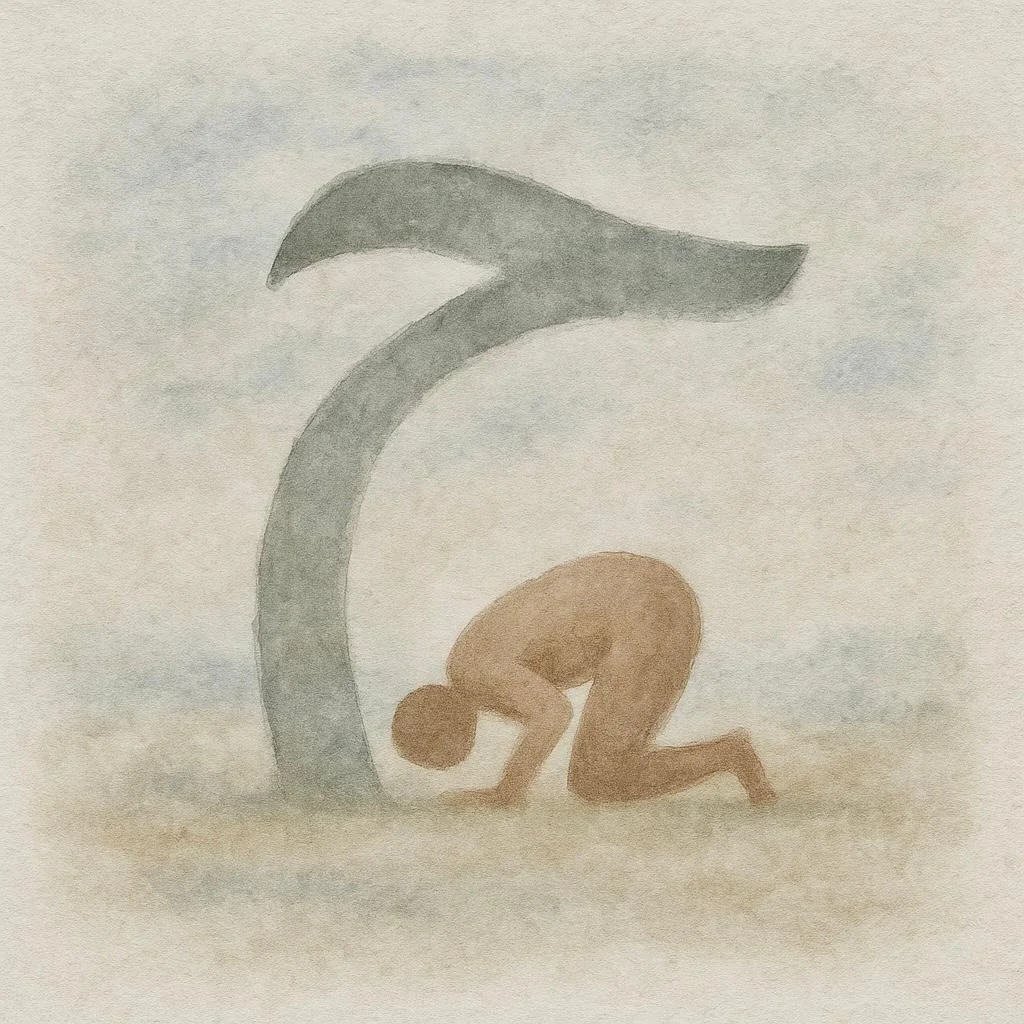
the heart was not designed to be gazed at. it was designed to face Allāh. and so if you find yourself watching your own sujūd with pride – turn around. face the One you were supposed to be worshipping.
before it’s your self you end up bowing to.